Evaluating the 3D Layered Papercut Decorative Mandala for Home Décor and Crafting
The intersection of traditional paper crafts and modern digital design has given rise to intricate decorative styles that appeal to both novice hobbyists and seasoned artists. Among these, the 3D Layered Papercut Decorative Mandala stands out as a versatile medium that combines geometric precision with organic floral elegance. This format is not merely a flat image but a dimensional art piece constructed through the strategic stacking of multiple paper layers. For consumers evaluating crafting resources, understanding the specific attributes, technical requirements, and aesthetic outcomes of this design style is essential before making a purchase or beginning a project.
This analysis explores the characteristics of the 3D Layered Papercut Decorative Mandala, specifically focusing on its application in shadow boxes, wall art, and greeting cards. By examining its structural integrity, compatibility with various cutting machines, and comparative advantages over other decorative methods, readers can determine if this resource aligns with their creative goals and skill levels.
Understanding the Structure and Aesthetic Appeal
A mandala, traditionally a spiritual and ritual symbol in Hinduism and Buddhism, represents the universe in a circular form. When translated into a 3D layered papercut format, the design gains depth and visual complexity. The core concept involves slicing distinct elements—such as petals, leaves, and ornamental borders—from individual sheets of cardstock and adhering them at varying distances from the background. This technique creates shadows and highlights that change depending on the viewing angle and lighting conditions.
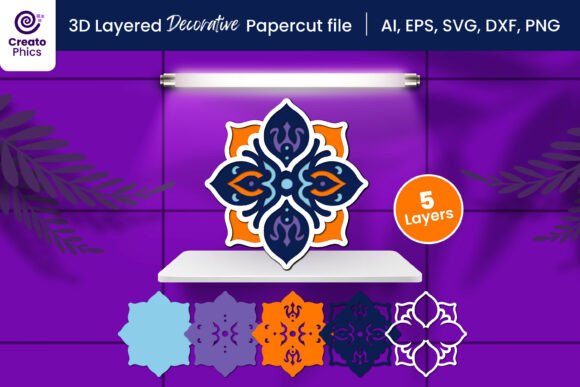
The specific design referenced here features floral elements integrated into symmetrical mandala patterns. This fusion offers a unique aesthetic balance: the mathematical perfection of the mandala provides structure, while the fluidity of the floral motifs adds softness and approachability. Unlike standard single-layer cutouts, which can appear flat and two-dimensional, the layered approach introduces a tactile quality. The result is a piece of décor that commands attention through its intricacy and the interplay of light and shadow it generates.
Technical Specifications and File Formats
For digital crafters, the utility of a design file is determined by its format and resolution. The 3D Layered Papercut Decorative Mandala is typically distributed as a digital download, offering immediate access without shipping delays. To ensure broad compatibility across different hardware ecosystems, high-quality providers offer files in multiple vector formats:
- SVG (Scalable Vector Graphics): The industry standard for most consumer cutting machines, including Cricut and Silhouette. SVG files allow for easy resizing without loss of quality.
- AI (Adobe Illustrator): Essential for professional designers who need to edit paths, adjust colors, or modify layer orders before exporting to other formats.
- EPS (Encapsulated PostScript): A robust format often used in professional printing environments and compatible with a wide range of graphic software.
- DXF (Drawing Exchange Format): Commonly used in engineering and CAD applications, but also widely supported by cutting software like Brother ScanNCut.
- PNG (Portable Network Graphics): Provided at 300 DPI, these raster images serve as reference guides or templates for hand-cutting projects where machine precision is not required.
The standard size of 12 inches by 12 inches is particularly advantageous. It fits perfectly within the maximum cutting area of most popular desktop cutting machines, allowing users to produce substantial pieces of wall art or large shadow box components without needing to stitch multiple smaller cuts together. Each layer is provided separately, which is a critical feature for assembly. Proper separation ensures that users can distinguish between foreground, midground, and background elements during the gluing process.
Comparing Layered Papercut to Alternative Décor Methods
When selecting home décor or gift items, consumers often weigh several options. Understanding how the 3D Layered Papercut Mandala compares to alternatives helps in making an informed decision.
Layered Papercut vs. Pre-Assembled Wall Art
Pre-assembled wooden or acrylic wall art offers convenience but lacks personalization. While store-bought pieces are ready to hang, they often lack the intricate detail achievable through digital cutting. The 3D Layered Papercut Mandala allows for customization in color palette and material choice. A user can select matte black cardstock for a modern look, metallic foil paper for luxury, or textured kraft paper for a rustic vibe. Furthermore, the act of assembling the layers serves as a meditative craft session, adding emotional value to the final product that mass-produced items cannot replicate.
Layered Papercut vs. Laser-Cut Wood Acrylic
Laser-cut materials provide durability and a premium feel but require significant financial investment in equipment or outsourcing costs. DIY laser cutting involves safety risks, ventilation concerns, and expensive machinery. In contrast, using a standard vinyl cutter with cardstock is cost-effective and accessible. While paper is less durable than wood or acrylic, it is lightweight, reducing stress on mounting hardware and making it safer for homes with children or pets. Additionally, paper allows for easier experimentation; mistakes can be corrected with minimal waste, whereas errors in laser cutting permanent materials can be costly.
Layered Papercut vs. Digital Printing
Digital printing on canvas or paper is fast and produces vibrant colors. However, it lacks the physical dimensionality of layered paper. A printed mandala remains flat, relying solely on ink for visual interest. The layered papercut technique introduces true three-dimensionality, creating actual relief and shadow. This makes it superior for projects intended to catch light, such as those placed near windows or under spotlights, where the depth enhances the visual impact.
Evaluating Suitability and Decision Factors
Not every crafter or homeowner will find the 3D Layered Papercut Mandala to be the ideal choice. Several factors influence whether this project fits one’s needs.
Skill Level and Time Commitment
This project is marketed as beginner-friendly, yet it requires patience and precision. Assembling a multi-layered mandala involves careful alignment and consistent adhesive application. Beginners should expect a slower workflow compared to simple sticker placement. However, the step-by-step nature of the separate layers mitigates complexity. Users do not need advanced artistic skills, only steady hands and attention to detail. For experienced crafters, the intricate floral details offer a satisfying challenge that tests their ability to manage fine lines and small components.
Maintenance and Longevity
Paper-based art is sensitive to environmental factors. Direct sunlight can cause fading, and humidity can lead to warping or mold. Therefore, this design is best suited for indoor use in controlled environments. If the goal is outdoor signage or high-traffic commercial displays, alternative materials like PVC or metal would be more appropriate. For home interiors, however, proper framing with UV-protective glass can preserve the artwork for years.
Cost-Benefit Analysis
The primary advantage of digital files is cost efficiency. Once purchased, the file can be printed and cut indefinitely. The marginal cost per unit drops significantly after the initial investment in cardstock and adhesive. Compared to buying a single pre-made decorative item, producing your own layered mandala is often cheaper, especially when creating sets for gifts or bulk home décor updates. The flexibility to reuse the file for different projects—such as scaling down for greeting cards or enlarging for wall art—adds further value.
Best Use Cases for the 3D Layered Papercut Mandala
The versatility of this design allows for diverse applications. Identifying the right use case ensures the project delivers maximum satisfaction.
- Shadow Boxes: The natural habitat for layered paper art. A deep-frame shadow box protects the delicate layers from dust and physical contact while enhancing the 3D effect through controlled internal lighting.
- Spiritual and Meditative Spaces: Given the mandala’s association with mindfulness, placing one in a yoga studio, meditation corner, or bedroom promotes a sense of calm. The symmetry aids focus, while the floral elements soften the atmosphere.
- Handmade Gifts: Personalized gifts carry significant weight. Creating a layered mandala for a housewarming, wedding, or birthday demonstrates thoughtfulness and effort. The customizable nature allows the giver to match the recipient’s interior design preferences.
- Greeting Cards: Scaling the design down enables the creation of premium, pop-up style cards. The intricate details elevate a simple card into a keepsake object that recipients are likely to display rather than discard.
Conclusion: Is It the Right Choice?
The 3D Layered Papercut Decorative Mandala represents a compelling option for those seeking to blend digital convenience with tangible craftsmanship. Its strength lies in its accessibility, aesthetic versatility, and the meditative process of assembly. While it requires patience and careful handling, the reward is a highly personalized piece of art that rivals professionally manufactured décor in visual impact.
Readers should consider this option if they enjoy hands-on crafting, desire customizable home accents, or wish to create meaningful handmade gifts. Those looking for low-maintenance, weather-resistant, or instantly ready-to-hang solutions might prefer pre-assembled alternatives. However, for the creative soul willing to invest time in the assembly process, the layered papercut mandala offers a unique blend of serenity, elegance, and creative fulfillment. By leveraging compatible file formats and understanding the material limitations, users can successfully integrate this design into their creative repertoire, resulting in beautiful, enduring works of art.