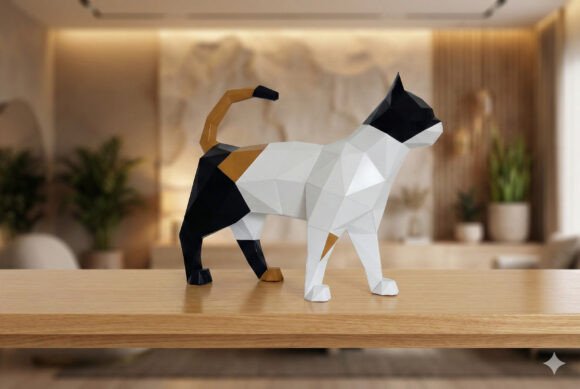
3D Papercraft Walking Cat
The 3D Papercraft Walking Cat is not merely a static model; it is an articulated figure designed to mimic the fluid motion of a feline in stride. This project stands out in the world of paper engineering because it combines aesthetic charm with mechanical simplicity. Unlike traditional flat origami or rigid dioramas, this design allows for dynamic posing, making it a captivating subject for display, photography, and tactile engagement. The product includes SVG cutting files, DXF and PNG formats, comprehensive PDF instructions, and a detailed materials list, ensuring that creators have every digital tool necessary to bring this walking companion to life.
At its core, this papercraft project represents a bridge between digital precision and analog craftsmanship. The intricate details are thoughtfully crafted to ensure that joints move smoothly without compromising structural integrity. For those who appreciate the intersection of technology and art, the inclusion of multiple file formats (SVG, DXF, PNG) speaks to a modern approach to hobbyist creation. It acknowledges that different users prefer different workflows—some may use vinyl cutters, while others rely on precise hand-cutting with craft knives.
Why Different Audiences Care About Articulated Paper Models
The appeal of the 3D Papercraft Walking Cat varies significantly depending on who is holding the scissors. While a casual observer might see a cute decoration, a professional designer sees a lesson in vector geometry, and an educator sees a hands-on STEM activity. Understanding these differing perspectives helps clarify why this specific project has gained traction among diverse groups.
For the cat lover, the emotional connection is immediate. A walking cat captures the playful, energetic spirit of a pet in a way that a sleeping figurine cannot. It serves as a dynamic reminder of companionship, perfect for a desk accessory or a shelf display that adds personality to a room. The ability to pose the cat mid-stride allows owners to customize the expression of movement, creating a personalized piece of decor.
For creators and designers, the value lies in the technical execution. The provided SVG and DXF files offer a template for understanding how complex curves translate into foldable structures. By analyzing the cut lines and fold guides, designers can learn how to create their own articulated models. The quality of the source files matters here; clean vectors ensure crisp cuts and accurate assembly, which is critical for maintaining the illusion of movement.
Evaluating the Project by Skill Level and Goal
Not all papercraft projects are created equal, and the difficulty curve of the 3D Papercraft Walking Cat is designed to be accessible yet rewarding. Here is how different user profiles might evaluate this product based on their specific priorities.
Beginners and Hobbyists
If you are new to 3D papercraft, the primary concern is usually frustration management. Will the pieces fall apart? Is the instruction manual clear? This project addresses these concerns by providing step-by-step PDF instructions. Beginners should focus on the "ease of use" aspect. The folding lines are pre-marked, reducing the guesswork involved in creating sharp creases. However, beginners must also consider patience. Cutting intricate shapes requires a steady hand. Using a self-healing mat and a fresh blade is essential. The goal here is not speed, but accuracy. Taking your time ensures that the glue joints hold firm, resulting in a satisfying final product that boosts confidence for more complex future projects.
Experienced Crafters and Artists
For seasoned crafters, the novelty factor is less important than the quality of the design. They will likely scrutinize the joint mechanisms and the scalability of the SVG files. Experienced users often prioritize "flexibility." Can they scale the model up to poster size or down to miniature keychains? With the PNG and DXF files available, resizing is straightforward. These users might also experiment with different materials beyond standard cardstock, such as metallic foils or textured papers, to add a unique artistic flair. For them, the 3D Papercraft Walking Cat is a canvas for experimentation rather than just a task to complete.
Educators and Parents
In an educational context, this project serves as an excellent tool for teaching spatial reasoning and fine motor skills. Teachers can use the assembly process to demonstrate geometric concepts like angles, symmetry, and polygons. The "learning value" is high when students engage with the physical manipulation of 2D planes into 3D objects. Parents might use this as a screen-free activity that encourages focus and following instructions. The requirement for cutting and gluing provides a tactile experience that digital games cannot replicate. Furthermore, discussing the anatomy of the cat while assembling the legs and spine can spark conversations about biology and movement.
Small Business Owners and Marketers
Entrepreneurs looking to add unique merchandise to their stores may find commercial value in this design. Whether selling finished units or DIY kits, the 3D Papercraft Walking Cat offers a low-cost, high-perceived-value item. Small business owners should evaluate the "cost" versus "presentation." Since the base materials (cardstock and glue) are inexpensive, the profit margin can be healthy if packaged well. Marketers might highlight the "DIY" aspect, appealing to customers who enjoy the satisfaction of creation. The included materials list helps in sourcing bulk supplies efficiently, ensuring consistency across inventory.
Technical Execution and Material Considerations
The success of any papercraft project hinges heavily on the materials used. The recommendation for Encore Cardstock 80 lb cover (216 gsm) is not arbitrary. This weight strikes a balance between durability and workability. Thinner paper may tear during cutting or fail to hold the shape of folds over time. Thicker board, while sturdy, can be difficult to fold sharply and may cause the glued joints to bulge or separate under stress.
- Durability: 80 lb cardstock provides enough stiffness to keep the cat standing upright without external support.
- Print Quality: This weight handles ink well, ensuring that any printed textures or colors remain vibrant and do not bleed through.
- Cutting Precision: It is thick enough to resist fraying but thin enough for standard craft blades to slice cleanly.
When preparing to build, ensure your printing equipment is calibrated. Color shifts in printing can sometimes obscure the subtle gray lines used for fold guides. If using a home printer, test print on scrap paper first to verify alignment. For those using professional services, specify the exact GSM to avoid substitutions that could compromise the final result.
Assembly Best Practices for Long-Term Use
To ensure the 3D Papercraft Walking Cat remains a lasting piece, proper assembly technique is crucial. Start by scoring all fold lines before cutting. Scoring involves running a blunt tool along the fold line to compress the fibers, allowing for cleaner bends. Next, cut out the parts with precision. Avoid jagged edges, as they can interfere with the fit of interlocking tabs. When gluing, use a small amount of adhesive. Excess glue can seep into visible areas, ruining the clean look of the design. Allow sufficient drying time between steps to prevent parts from shifting out of alignment.
Finally, consider the display environment. Direct sunlight can fade cardstock over time, so position the cat away from windows. Dusting gently with a soft brush will maintain its appearance. By treating the assembly process with respect and care, the 3D Papercraft Walking Cat transforms from a simple paper cutout into a durable work of art that celebrates both feline grace and human ingenuity.