Creating Depth and Dimension with Sea Turtle 3d Multilayer PaperСut Files
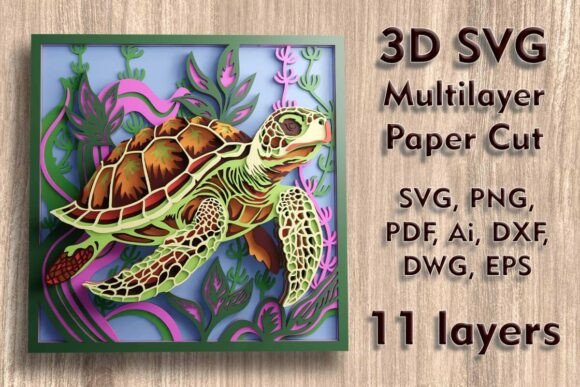
The world of modern crafting has evolved significantly, moving beyond simple flat cutouts into the realm of immersive, three-dimensional art. At the forefront of this creative revolution is the Sea Turtle 3d Multilayer PaperСut Files collection, a sophisticated digital asset designed to bridge the gap between traditional paper craft and contemporary home decor. This specific design, known as Sea Turtle Mundala Svg, offers creators the ability to produce stunning 3D wall art and shadow box displays that capture the fluid grace of marine life through geometric precision.
Whether you are a professional interior designer seeking unique accent pieces, a hobbyist looking to elevate your Cricut projects, or an educator demonstrating the principles of vector graphics, understanding the intricacies of multilayer SVG files is essential. The following guide explores the technical specifications, material versatility, and artistic potential of these designs, providing a comprehensive overview for anyone interested in bringing this oceanic masterpiece to life.
Understanding the Architecture of the Design
The core appeal of the Sea Turtle 3d SVG Multilayer PaperСut Files lies in its structural complexity. Unlike standard single-layer stencils, this design is composed of 11 separate layers. Each layer represents a specific depth plane, contributing to the overall illusion of volume when assembled. The final assembled piece measures approximately 9.85 inches wide by 9.85 inches high, which corresponds precisely to a 250 x 250 mm canvas. This square format provides a balanced composition that fits seamlessly into various framing styles and wall arrangements.
The "Mundala" style refers to a technique where concentric or overlapping shapes create a sense of movement and texture. In the case of the sea turtle, the shell patterns, flippers, and head are deconstructed into distinct geometric segments. When layered, these segments interact with light and shadow, creating a dynamic visual effect that changes depending on the viewer's angle. This makes the artwork not just a static image, but an interactive experience that engages the observer.
Scalability and Precision Considerations
One of the most valuable features of these digital files is their scalability. While the default size is optimized for a 250mm square frame, the vector nature of the files allows for easy resizing. However, users must exercise caution when reducing the scale of the design. As the dimensions shrink, the thin elements connecting the various parts of the turtle may become too fragile to cut or handle effectively. For intricate details to remain intact, it is generally recommended to maintain the original size or increase it slightly. Reducing the file size below the optimal threshold can result in broken lines or lost details, particularly in the delicate curves of the turtle’s flippers.
Conversely, increasing the size enhances the visibility of the geometric nuances. A larger display allows the eye to appreciate the subtle shifts in color and texture between layers, making it an ideal choice for statement pieces in living rooms, offices, or educational settings. The flexibility to scale up ensures that the design remains versatile across different spatial requirements.
Material Versatility: From Wood to Acrylic
A significant advantage of using Sea Turtle 3d Multilayer PaperСut Files is the broad range of compatible materials. These files are not limited to paper crafts; they are engineered to work with a variety of substrates suitable for cutting machines, laser engravers, and CNC routers. This versatility allows creators to choose materials based on their desired aesthetic, durability, and budget.
- Plywood and MDF: For a rustic or natural look, plywood and Medium Density Fiberboard (MDF) are excellent choices. These materials provide sturdy support for the 11 layers and hold their shape well over time. Laser cutting plywood adds a warm, organic tone that complements the marine theme of the sea turtle.
- Cardstock and Paper: Traditional paper crafting enthusiasts will find these files perfect for creating lightweight shadow boxes. High-quality cardstock offers enough rigidity to stand up in a frame while allowing for crisp cuts. Layering different shades of blue, green, and white cardstock can mimic the colors of the ocean and the turtle’s skin.
- Acrylic and Aluminum: For a modern, sleek appearance, acrylic sheets or aluminum can be used. Laser-cut acrylic can achieve a translucent effect, allowing light to pass through the layers and create a glowing, ethereal look. Aluminum provides a durable, industrial-chic finish that is resistant to moisture and wear.
- Cardboard: For prototyping or large-scale installations where weight is a concern, cardboard offers a cost-effective solution. It is easy to assemble and modify, making it ideal for temporary displays or educational workshops.
The choice of material also influences the cutting method. While Cricut and Silhouette machines excel at cutting paper, cardstock, and thin vinyl, laser cutters like Glowforge are better suited for wood, acrylic, and thicker materials. The included files ensure compatibility across these platforms, giving users the freedom to select the tool that best suits their workshop capabilities.
Technical Specifications and File Formats
Upon purchase, users receive a comprehensive ZIP folder containing all necessary assets to begin their project immediately. This package is designed to accommodate different software preferences and machine types, ensuring maximum usability. The inclusion of multiple file formats eliminates the need for conversion, saving time and preserving the integrity of the vector paths.
- SVG (Scalable Vector Graphics): The primary format for most cutting machines, including Cricut Design Space and Silhouette Studio. This format preserves the editable paths and layers, allowing for precise adjustments before cutting.
- Layered SVG Files: Specifically organized to maintain the 11 distinct layers. This is crucial for assembly, as each layer must be cut separately and stacked in the correct order to achieve the 3D effect.
- DXF and DWG: Essential for CAD software and CNC routers. These formats ensure that the design can be interpreted accurately by industrial-grade machinery, making them suitable for professional fabrication.
- EPS and AI: Standard formats for Adobe Illustrator and other vector editing programs. These allow designers to make further modifications, such as changing colors, adding text, or adjusting the layout before sending the file to a cutter.
- PNG and PDF: Raster and document formats included for reference purposes. These are useful for visualizing the final design without opening specialized software or for printing physical templates if needed.
This diverse array of formats underscores the professional quality of the Sea Turtle 3d Multilayer PaperСut Files. Whether you are working in a home studio with a consumer-grade cutter or a commercial facility with a large-format laser, the files are ready to go.
Applications in Home Decor and Education
The Sea Turtle Mundala Svg is more than just a craft project; it is a versatile design element with numerous applications. Its primary use is as 3D Wall Art. When assembled and mounted on a wall, the layered turtle creates a striking focal point. The interplay of shadows cast by the raised layers adds depth to the room, transforming a plain wall into a piece of art. This type of decor is particularly popular in nautical-themed spaces, children’s rooms, or eco-conscious homes that wish to highlight marine conservation themes.
Beyond wall art, the design can be adapted for shadow boxes. By mounting the layers onto a deep-frame backing, the piece becomes a self-contained sculpture. This format protects the delicate layers from dust and damage while enhancing the 3D illusion. Shadow boxes are often gifted as unique presents for birthdays, holidays, or housewarmings, combining personal sentiment with artistic value.
In an educational context, these files serve as excellent tools for teaching geometry, engineering, and art. Educators can use the 11-layer structure to demonstrate concepts such as symmetry, proportion, and spatial reasoning. Students can engage in hands-on learning by assembling the layers, calculating scale ratios, and experimenting with different materials. This practical application reinforces theoretical knowledge and fosters creativity.
Workflow Tips for Optimal Results
To fully realize the potential of the Sea Turtle 3d SVG Multilayer PaperСut Files, following a structured workflow is recommended. First, import the layered SVG into your chosen software and verify that all 11 layers are correctly separated. Assign a unique color to each layer to avoid confusion during the cutting process. Next, select your material and adjust the machine settings accordingly. For example, laser power and speed will vary significantly between paper and plywood.
After cutting, carefully remove the excess material from each layer. Use tweezers for small, intricate pieces to prevent tearing. Assembly is the final and most critical step. Begin with the backmost layer and progressively add the front layers, using spacers such as foam tape or wooden rods to maintain consistent distance between planes. This spacing is what creates the depth; without it, the layers will appear flat. Finally, mount the assembled piece to a backing board or directly to the wall using adhesive hooks or screws.
Conclusion
The Sea Turtle 3d Multilayer PaperСut Files represent a fusion of technology and artistry, offering endless possibilities for creators. With its 11-layer complexity, scalable design, and compatibility with a wide range of materials and machines, this SVG file is a valuable addition to any crafter’s library. Whether used for personal enjoyment, professional decoration, or educational instruction, the Sea Turtle Mundala Svg delivers a visually captivating result that celebrates the beauty of the natural world through the lens of modern digital fabrication.